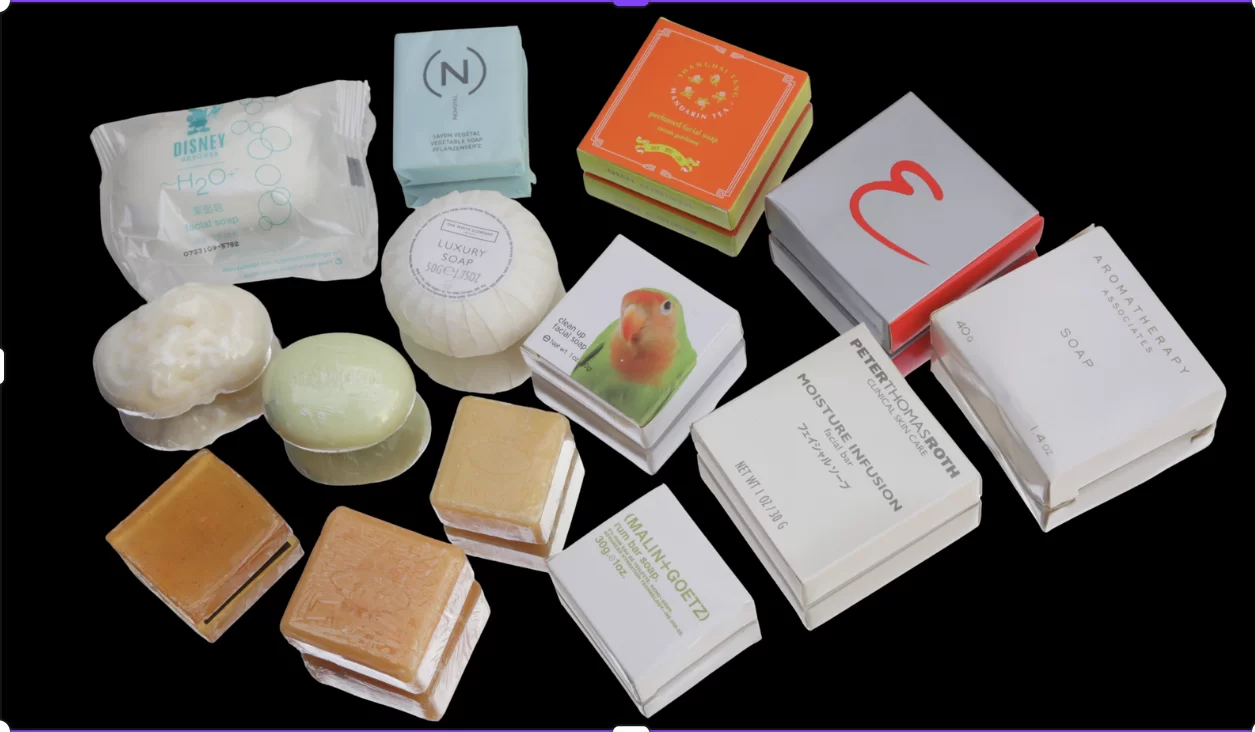
A journey through the evolution of the hospitality ritual through fragrances, design and memory
The little hotel soaps we find in today’s amenities seem like simple, almost automatic objects—part of any travel routine. But their history is far from trivial. They were once status symbols, markers of luxury, collectible items, and even tools of sensory storytelling. Over more than a century, they have evolved from rare handcrafted pieces into icons of hospitality culture. Understanding this journey is to see how an apparently everyday gesture carries layers of design, identity, and olfactory memory within it.
In them, the history of hospitality reveals itself in scent
In the 19th century, soap was not yet a widely available product. The notion of modern hygiene was still taking shape, and luxury hotels saw an opportunity in this. Providing individual soaps demonstrated care, progress, and refinement. More than a mere toiletry item, it served as a silent message indicating that cleanliness was part of the welcoming experience. At a time when few homes had access to quality hygiene products, hotels stood out by offering this touch of distinction.
The first hotel soaps were handmade by perfumers in Paris or Florence. Each hotel commissioned its own fragrance and specified ingredients, texture, shape, and packaging to express its identity. These soaps acted as brand extensions, representing style and personality. Unwrapping a soap swathed in waxed paper and stamped with elegant crests was part of the experience—almost like opening a small, carefully prepared gift.
The birth of the fragrances that shaped classic hospitality
Some hotels became known for their signature scents. The Ritz Paris chose lavender—elegant and serene. London’s Savoy stood out with almond milk—soft and comforting. New York’s Waldorf Astoria adopted gardenia notes—a bold and sophisticated perfume. These “olfactory signatures” forged emotional bonds with travelers, who came to associate their stays with the aroma preserved in a small bar of soap. It was a way to extend the experience long after check-out.
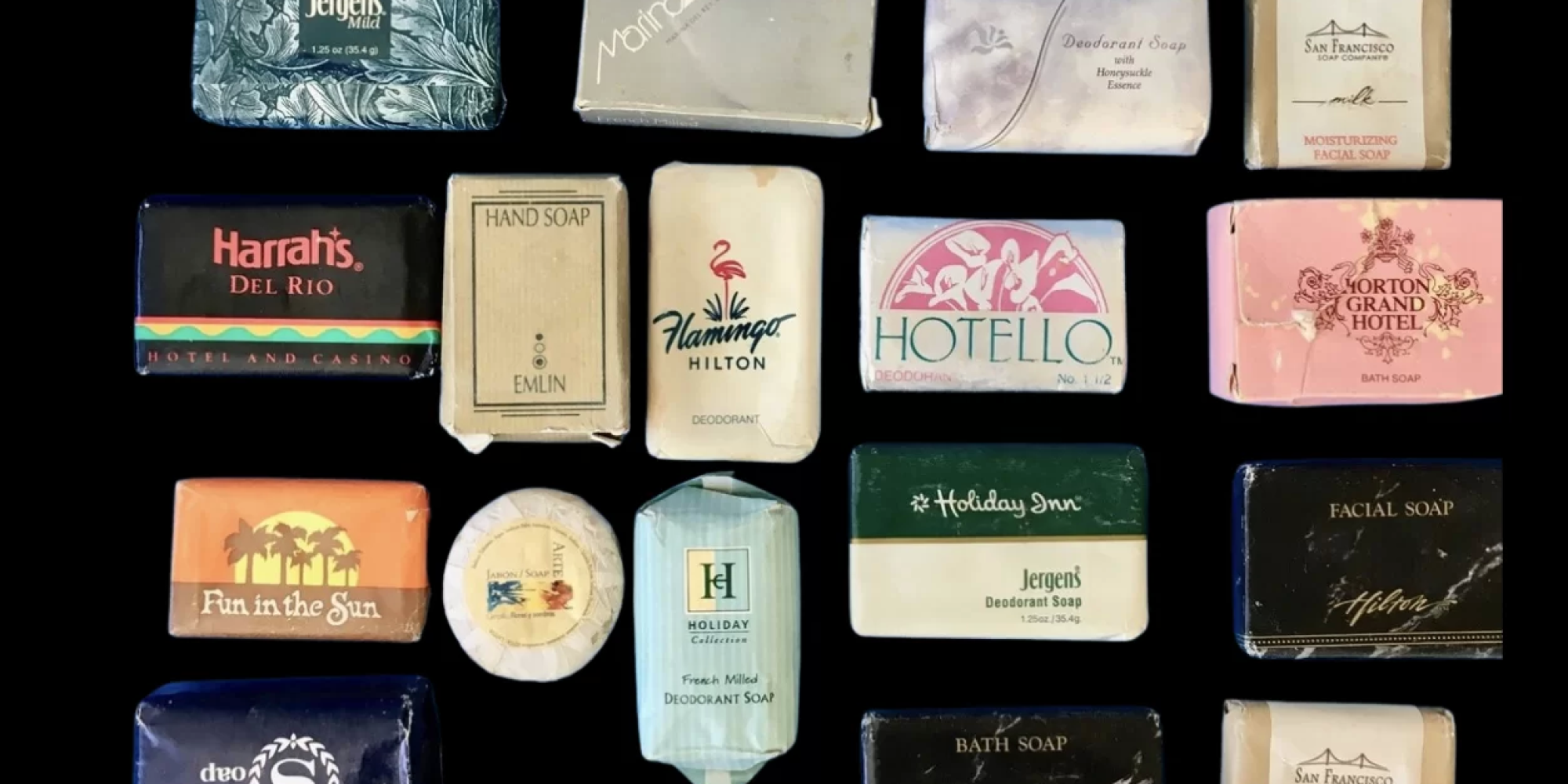
Over time, hotel soaps became collectible items. Enthusiasts around the world began seeking out vintage versions as true time capsules. Packaging with gilded crests, bars engraved with historic names, discontinued fragrances, and antique typography illustrate decades of cultural evolution. Keeping a soap became a way to preserve a fragment of tourism and perfumery history, as well as an affectionate memento of moments and places.
During the golden age of aviation, airlines took inspiration from hotels and began offering mini bars of soap and creams in their onboard kits. These small products symbolized the glamour of flying, especially when air travel was a truly sophisticated experience. Just as in hotels, airline amenities became coveted keepsakes and even collectible items. The act of unwrapping a soap during the flight reinforced a sense of care and distinction.
With the modernization of hospitality, hotels realized that exclusive fragrances could be used as a strategy to create olfactory memory. The identity of the scent became as important as the room design, the service, or the cuisine. The aroma of the amenities was crafted to accompany the guest throughout their entire stay, marking sensations and forging emotional bonds that endure over time. Lodging ceased to be only visual and tactile—it became profoundly olfactory.
In recent years, brands like Le Labo, Byredo, and Diptyque have rekindled the charm of artisanal soaps. With refined ingredients, meticulous formulations, and minimalist aesthetics, these fragrance houses have transformed amenities into small sensory masterpieces. By developing exclusive products for hotels, they restored the soap’s role as an object of desire. Unwrapping a bar of soap once again became a ritual, and the attention to scent began to reinforce a hotel’s identity in an elegant, contemporary way.
Today, unwrapping a hotel soap is almost a ritualistic act. The texture, the fragrance, the packaging design, and even the sound of the paper unfolding compose a micro-experience that connects past and present. That small object, fitting in the palm of your hand, carries over a century of hospitality culture. Whether in a historic European palace, a tropical resort, a minimalist boutique hotel, or a contemporary urban stay, the soap remains a symbol of welcome, care, and memory.
The next time you open a soap on your journey, remember that you’re holding much more than a hygiene item. You’re holding an entire narrative—an object that was once a status symbol and has now become part of our emotional imagination. Perhaps that’s why so many people still keep them. They condense the essence of hospitality: turning the ordinary into an experience, the everyday gesture into a memory, and the fleeting scent into a lasting remembrance.