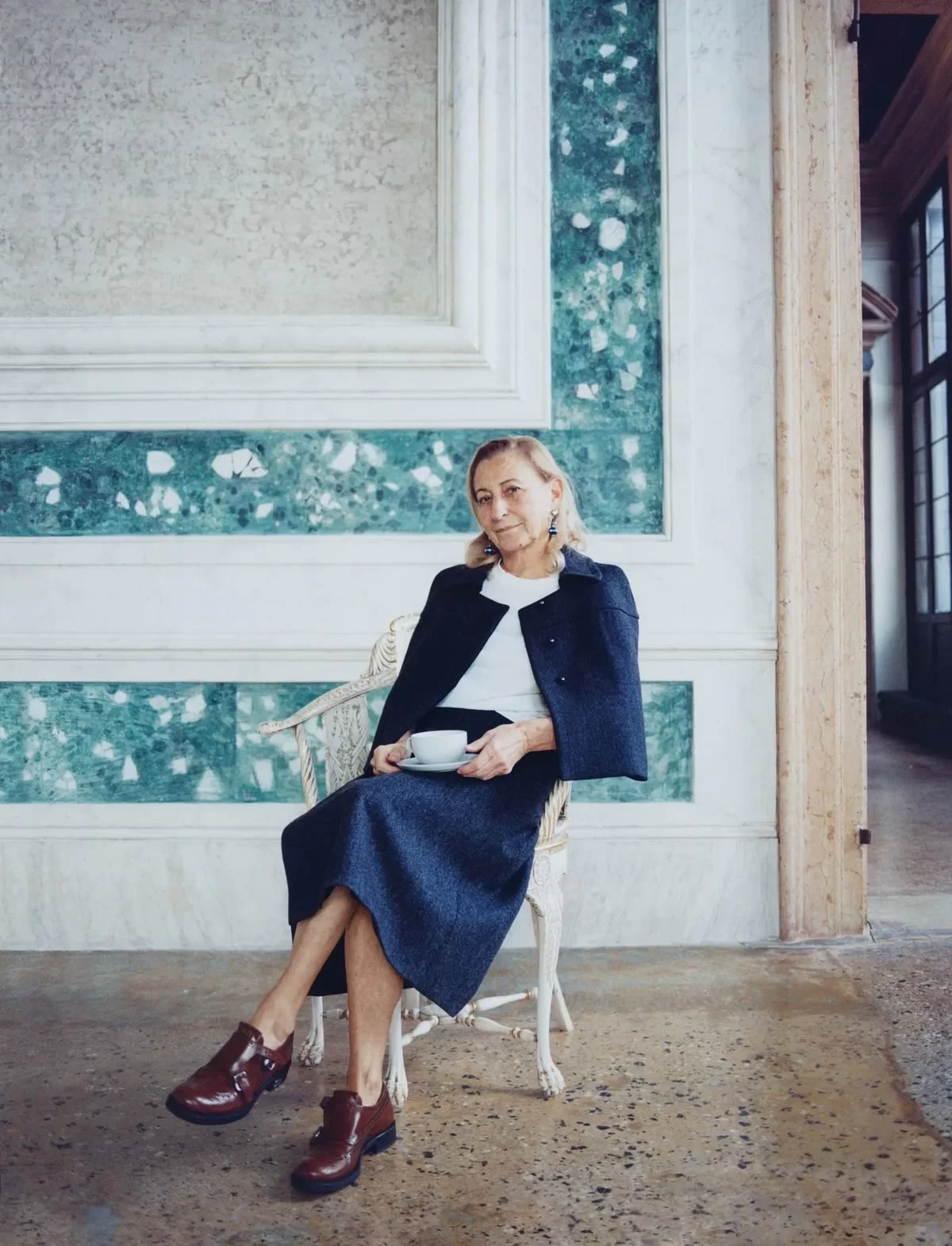
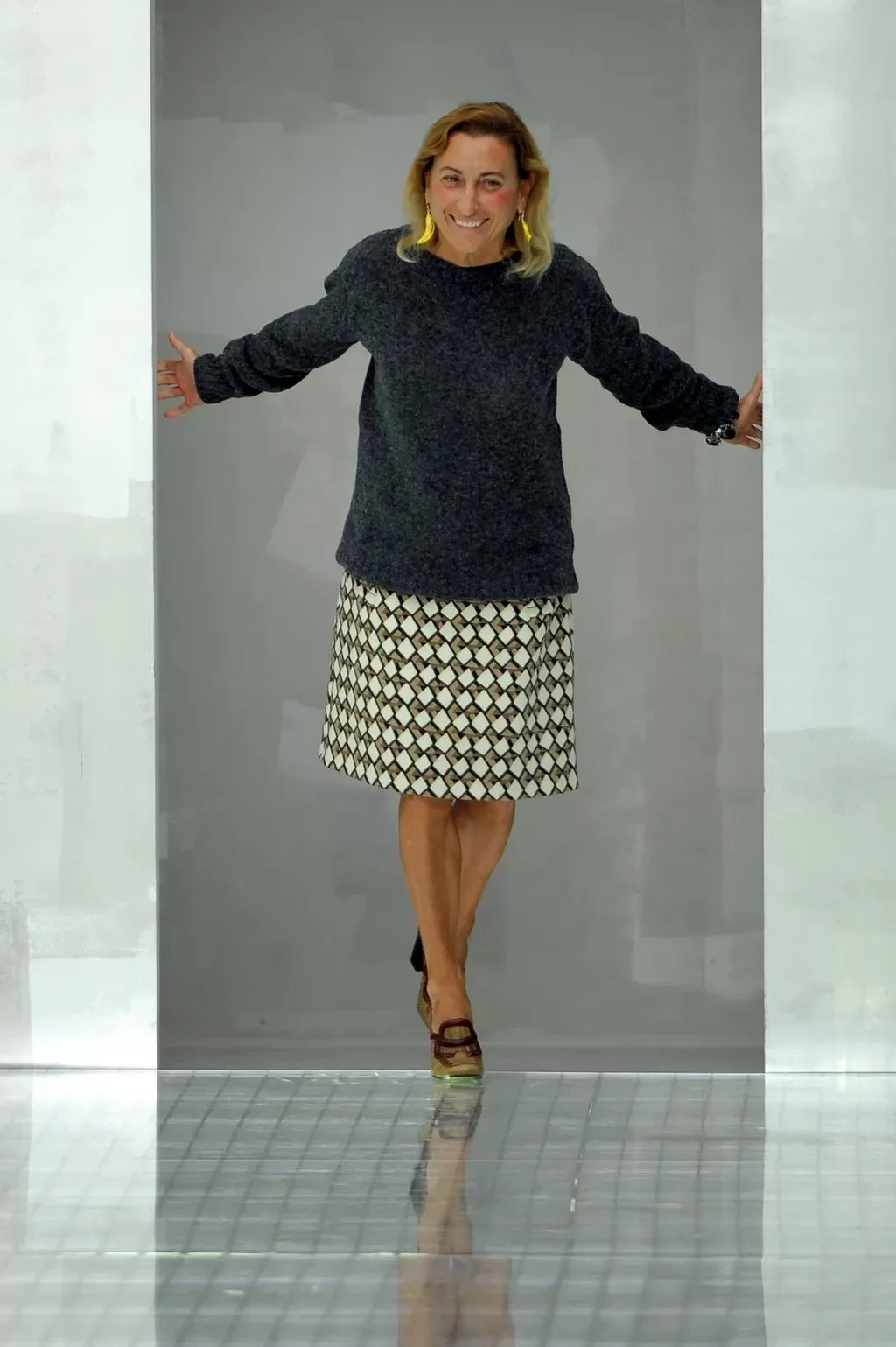
How Miuccia’s radical vision redefined desire, perception, and the very meaning of what we call fashion
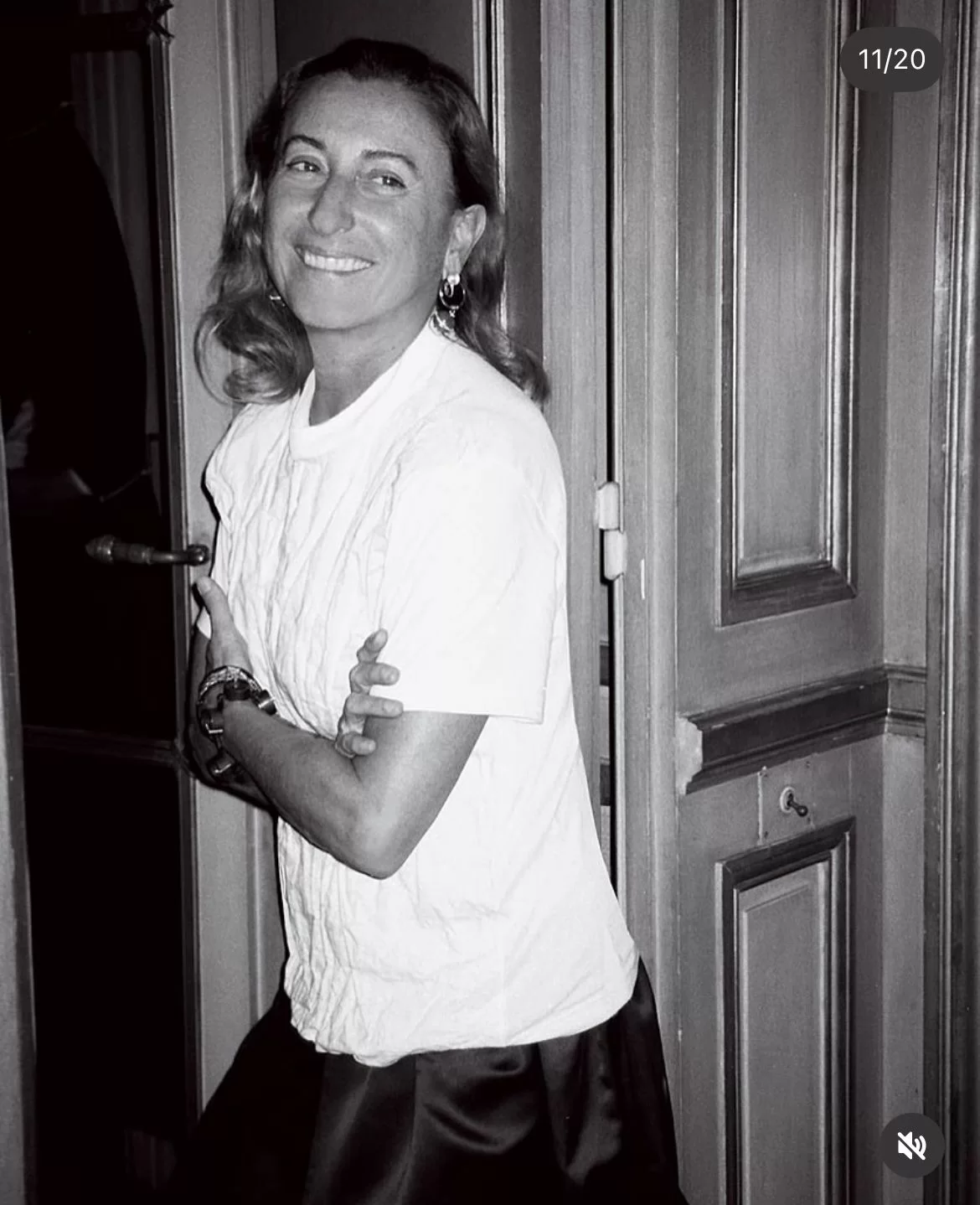
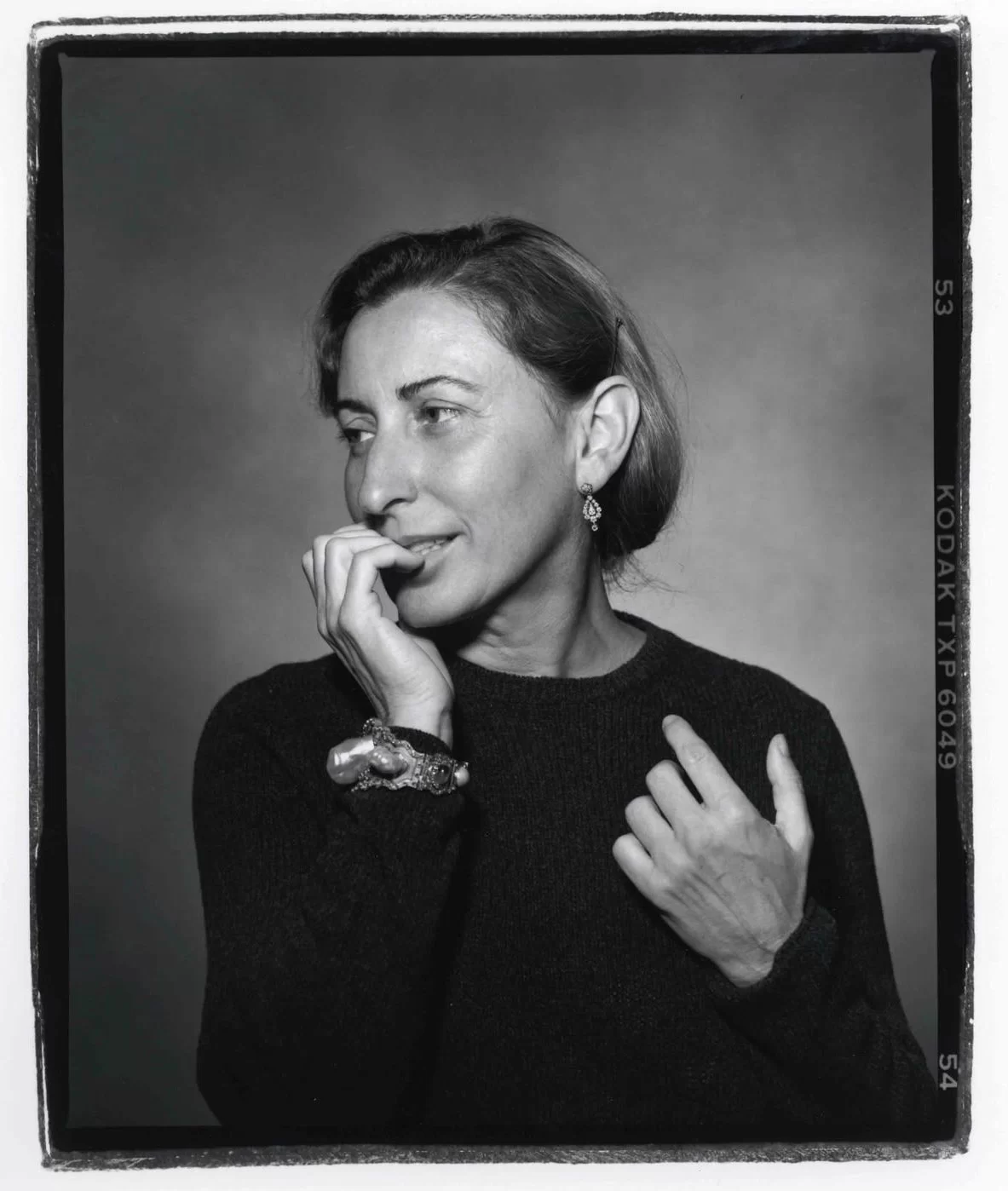
There are names in fashion that set trends. And there are names that build entire ways of thinking. Miuccia Prada belongs to that second category: the kind of minds that displace, strain, and reconfigure everything we understand as aesthetics, beauty, and identity. In a universe saturated with polished images, calculated appearances, and repeating narratives, Miuccia emerges like an antidote: she doesn’t smooth edges. She doesn’t seek consensus. And she has never been concerned with pleasing. Paradoxically, it is precisely this that makes her so irresistible.
“Beauty lies in what is strange,” she once declared. Few phrases translate so directly the soul of Prada, a brand that has made discomfort, estrangement, and the non-obvious a fertile territory for desire, interpretation, and sophistication. Miuccia, PhD in political science and granddaughter of the house’s founder, transformed a family business into a contemporary manifesto on nonconformity, intelligence, and intuition.
Her creations flirt with the ugly, the displaced, with that which does not conform to conventional expectations.
Estética como provocação
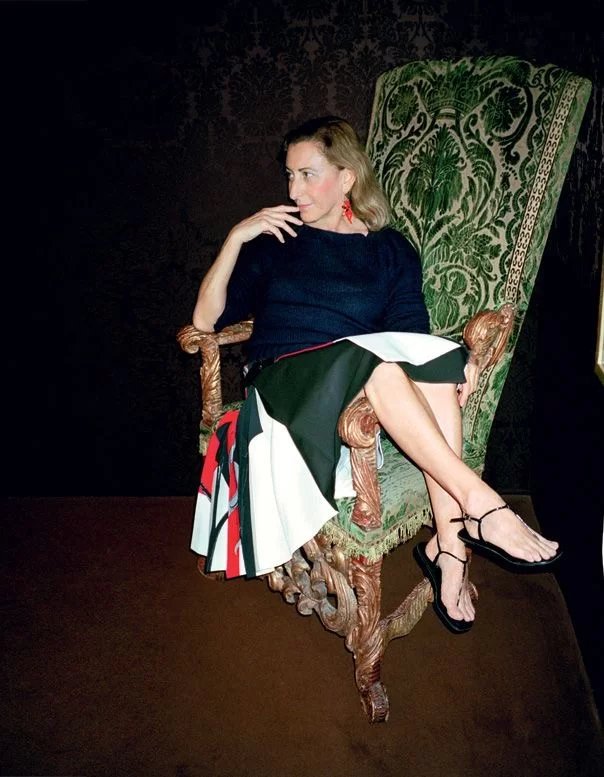
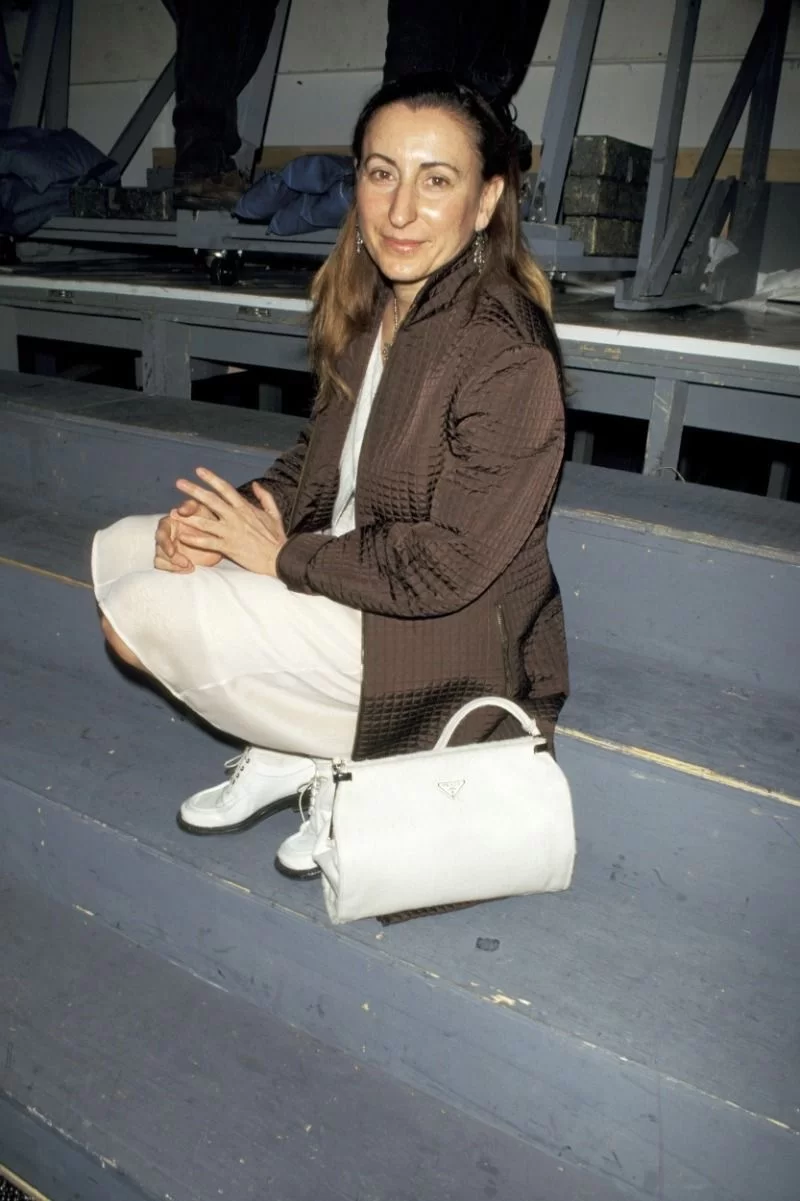
From the moment she took over creative direction, it was clear that Miuccia would not follow the script of predictable beauty: strangely voluminous shoes. Deliberately challenging fabrics. Combinations that, before her, would have been considered improbable, and that, after her, began to constitute a new visual language. In her hands, fashion is not ornament: it is thought in the form of clothing.
What makes her work transcend trends is the ability to combine intellectual rigor and instinctive impulse. Each collection seems laden with a commentary, subtle or explicit, on politics, identity, power, femininity, masculinity, ambiguity. Nothing exists there merely to be beautiful. Everything exists to signify. The runway becomes a critical space, almost a mirror where our own certainties are put to the test.
By observing Prada’s trajectory, one realizes that Miuccia trains our gaze. Gradually, we learn to find beauty precisely in what we once avoided. Her seemingly odd shoes force us to reconsider what we consider harmony. Her disconcerting proportions challenge those who expect an easy solution from clothing. Her unlikely layering shows that elegance can emerge from the unexpected. It’s as if she presses an internal button that shifts our perception—and from there on, we never view the world the same way again.
This act of displacement is perhaps Miuccia’s greatest legacy. In times dominated by infinite filters, perfect images, and overly edited narratives, she reminds us that the unfinished can also be fascinating. That the strange can be more honest than the polished. That fashion, when conceived with courage, is capable of provoking, unsettling, inviting debate and, still, arousing desire. Not an automatic desire, but a desire born from impact, reflection, confrontation.
Speaking of the Prada woman is speaking of a figure that escapes any rigid definition. She is cultured, complex, ironic, conscious. She is not afraid of seeming “too much” or of not seeming enough. She is multiple, sophisticated, restless. She carries with her a kind of elegance that does not seek approval; it seeks meaning. Perhaps that is why she is so recognizable, even when she seems to dive into contradictions.
The Prada Woman wears ideas. She wears possibilities. She wears what provokes, what expands, what resists the easy. Her style is a silent form of intelligence. And it is precisely in that territory, where beauty and strangeness meet, that Miuccia Prada remains one of the most relevant voices of our time. Her fashion is a form of thought. And her vision, a constant reminder that true charm almost never lies in the obvious, but in the unexpected.